

News | Industrial Combustion Equipment
All the latest News on our company


New oil refinery projects: investments, capacity, and trends
Posted on: 14 / 08 / 2026 | 0 Comentarios | Tags: Burners fo oil and gas heaters, E&M Combustión, New oil refinery projects, Nuevas refinerías de petróleo, Nuevos proyectos de refinerías de petróleo, Quemadores para Heaters de Oil and Gas
The construction of new oil refinery projects had become a relatively rare activity across much of the world. High investment costs, complex permitting processes, environmental requirements, and the transformation of the energy system meant that, for years, the bulk of investment was concentrated on expanding, modernizing, or retrofitting existing facilities.
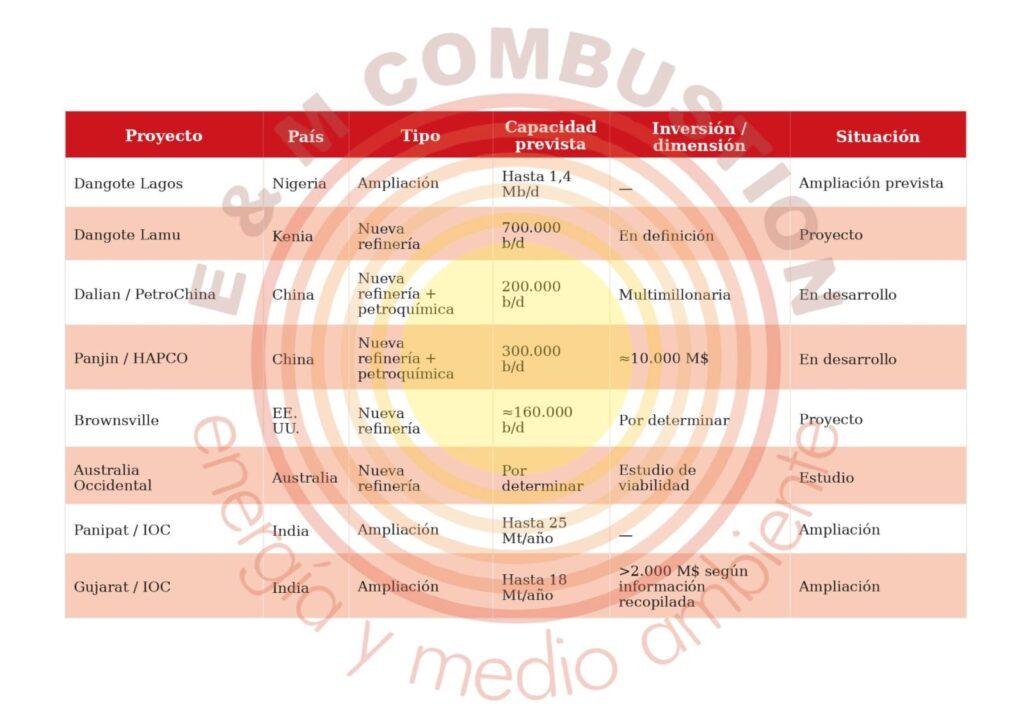
However, various projects across Africa, Asia, the United States, and Australia demonstrate that refining remains a strategic sector. New plants, major expansions, and integrated refining and petrochemical complexes are reshaping the global map of crude oil processing capacity.
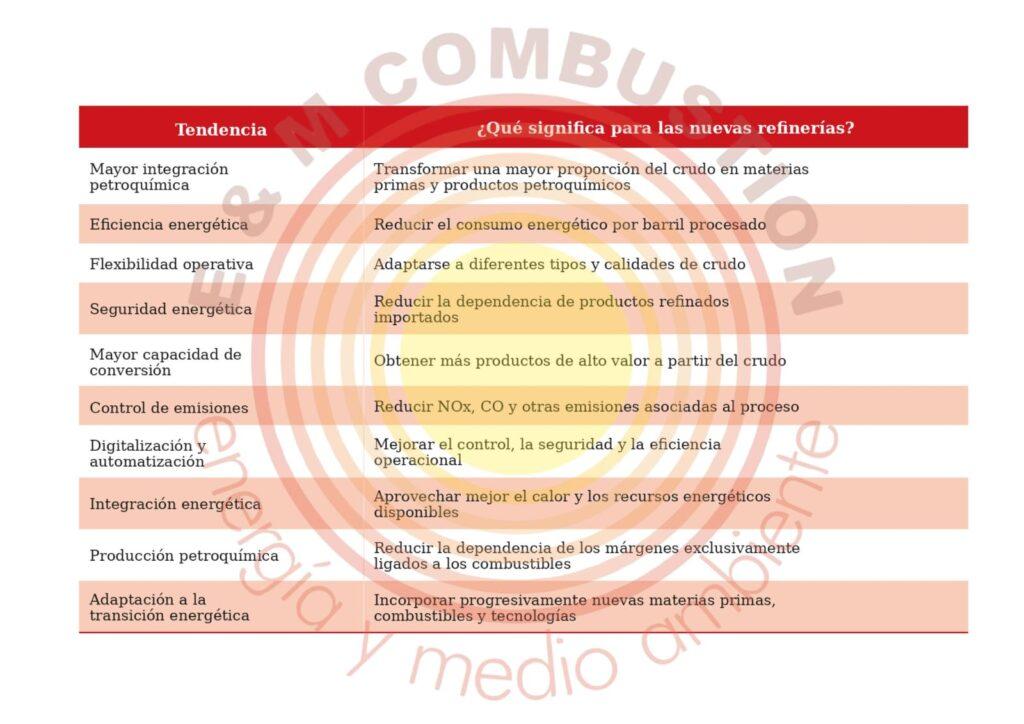
From the Dangote megaproject in Africa to planned facilities in China and the United States—alongside capacity expansions in India and a proposed new refinery in Australia—current projects share several characteristics: greater petrochemical integration, a focus on energy efficiency, flexibility in crude processing, and increasing attention to emissions control.
Indeed, the international energy landscape is introducing new factors. Supply security, rising fuel demand in specific economies, the need to reduce import dependency, and the development of large-scale petrochemical complexes are driving new refining projects across the globe.
Africa stands out as a prime example. The commissioning of the Dangote refinery in Nigeria has shifted the regional market balance and paved the way for further projects. In Asia, China and India continue to make significant investments in refining and petrochemical capacity, while the United States is once again considering the construction of a new refinery after decades without projects of this magnitude. Meanwhile, Australia is exploring the restoration of refining capacity to address its heavy reliance on imported fuels.
The result is a new global refining landscape characterized by a mix of new plants, major expansions, and integrated refining and petrochemical complexes.
Africa: Nigeria Drives a New Era for Regional Refining
Nigeria is a prime example of this new dynamic. For decades, the country exported much of its crude oil while simultaneously importing significant quantities of refined fuels. According to Vanguard NGR, the commissioning of the Dangote refinery in Lagos is progressively transforming this model.
The facility, which has a capacity of 650,000 barrels per day, began operations in 2024 and has become one of the continent’s major fuel production hubs. The complex produces gasoline, diesel, and aviation fuel, among other products, and also incorporates petrochemical operations.
The impact extends beyond the Nigerian market. The increased availability of refined products is boosting exports to other African nations and helping to develop a regional fuel market. Reuters recently reported that West African regulators are even pushing for the creation of a regional trading market and a fuel price benchmark system, driven largely by the expansion in refining capacity led by Dangote.
Dangote prepares for further expansion
Dangote’s strategy extends beyond the Lagos facility. In August 2026, Reuters reported that the group is considering raising approximately $5 billion through an initial public offering (IPO) to fund—among other objectives—the expansion of the Lagos refinery and the development of a new facility in Kenya. The Lagos expansion could increase capacity from the current 650,000 barrels per day to approximately 1.4 million barrels per day by 2028.
However, the project generating the most interest regarding new facilities is the one in Lamu, Kenya. Reuters reported in July 2026 that Dangote plans to build a refinery there with a capacity of approximately 700,000 barrels per day, which could become the largest refining facility in East Africa. The project would be financed through a combination of internal funds, debt, and the group’s planned IPO, with construction expected to take about three years.
The new facility would aim to supply both the Kenyan market and other East African countries, thereby reducing regional dependence on imported petroleum products.
China: new complexes, but with Greater Petrochemical Integration
The situation in China is different. The country possesses one of the world’s largest refining capacities while simultaneously facing overcapacity issues in certain segments. Consequently, new investments are not driven solely by the need to produce more fuel. The trend points toward complexes featuring greater integration between refining and petrochemical operations—facilities capable of converting a larger share of crude oil into feedstocks and higher value-added products, as noted by Energies Media.
One of the projects highlighted in the reports analyzed is PetroChina’s new complex in Dalian. The project entails a refinery with a capacity of approximately 200,000 barrels per day, integrated with a 1.4-million-tonne-per-year ethylene plant, as well as various petrochemical units for producing polyethylene, elastomers, and polypropylene.
This project illustrates a key industry trend: refineries are no longer viewed exclusively as facilities for producing gasoline, diesel, or jet fuel; instead, they are increasingly integrated with petrochemical processes designed to manufacture raw materials for other industries.
At the same time, the evolution of these projects demonstrates that timelines can shift. In June 2026, Reuters reported delays in certain Chinese projects due to difficulties in securing crude oil supplies from the Middle East.
Panjin: Saudi Aramco and China’s bet on refining and petrochemicals
Another major Asian project is the Panjin complex in northeastern China, developed by Huajin Aramco Petrochemical Company, a joint venture involving Saudi Aramco.
The project entails an estimated investment of around $10 billion and includes a refinery with a capacity of 300,000 barrels per day. It also features significant petrochemical facilities, including units capable of producing 2 million tonnes of paraxylene and 1.65 million tonnes of ethylene annually.
The integration of refining and petrochemical operations is a key element of the project. Saudi Aramco will supply the crude oil that the complex will use as feedstock.
However, the timeline has not been without uncertainty. Reuters reported in June that the complex’s startup had been delayed—shifting from the initial forecast of May–June to September–October—due to difficulties regarding feedstock supplies.
India: capacity growth through major expansions
India represents another major hub for refining investment. Unlike Nigeria or the Brownsville project in the United States, a significant portion of Indian investment focuses on the expansion and modernization of large, existing facilities.
Indian Oil Corporation has been developing projects to increase capacity at its Panipat, Gujarat, and Barauni refineries. Reuters reported that these initiatives are part of the country’s strategy to substantially boost its refining capacity—with a particular focus on Panipat, where capacity is set to rise from 15 to 25 million tonnes per year, and Gujarat, which is expected to increase from 13.7 to 18 million tonnes per year.
This investment is also linked to greater integration with the petrochemical industry. This trend is particularly significant for the future of the refining sector: the goal is not merely to increase the volume of processed barrels, but to enhance flexibility, improve facility efficiency, and produce higher-value-added petrochemical products.
United States: he return of new oil refineries
One of the announcements attracting significant international attention comes from the United States. The America First Refining project, located in Brownsville, Texas, has been unveiled as the first new U.S. refinery in roughly half a century. The project stems from an initiative previously linked to Element Fuels. The planned facility would have a capacity exceeding 160,000 barrels per day and is designed to process light oil from U.S. shale fields.
The proposal is particularly significant because the United States has seen strong growth in oil production over recent decades, yet much of its refining capacity comes from facilities built long ago. The new plant aims to address a specific characteristic of the U.S. market: the availability of large volumes of light crude alongside refining infrastructure that is not always optimized to process it.
According to published reports on the project, the plant could process around 1.2 billion barrels of U.S. light oil and produce approximately 50 billion gallons of refined products over its projected operational lifespan.
The proposal also has a technological dimension. The project is presented as a low-emission facility featuring advanced systems, although its ultimate viability and construction timeline remain key issues.
Indeed, the project’s background illustrates why building new refineries in the United States is so rare: high costs, complex permitting processes, and environmental requirements have historically hindered such investments.
Australia, a new refinery amidst energy security challenge
According to an article in El País, Australia offers perhaps the clearest example of how energy security concerns are bringing the construction of new refining facilities back onto the agenda. The Australian government is considering building a new refinery in Western Australia—a move that would restore refining capacity through a new facility for the first time since 1960.
The project is still in its preliminary stages. The federal government and the government of Western Australia have announced a joint investment of 4 million Australian dollars to conduct a pre-feasibility study to determine the project’s viability. The initiative is linked to the industrial group Perdaman.
The primary driver is strategic. Australia relies on imports for approximately 80% of its fuel needs, yet currently has only two operational refineries, located in Victoria and Queensland.
The debate highlights one of the sector’s major current dilemmas: to what extent does it make sense to build a new refinery in a market where Asian facilities can produce fuel at a lower cost? Reuters has pointed out several obstacles facing the Australian project, including the need to import crude oil, uncertainty regarding future demand, and Perdaman’s lack of prior experience in the refining business.
Australia thus presents a particularly interesting case: energy security considerations can justify exploring a new refinery even when economic profitability is not immediately apparent.
Characteristics of new oil refinery projects
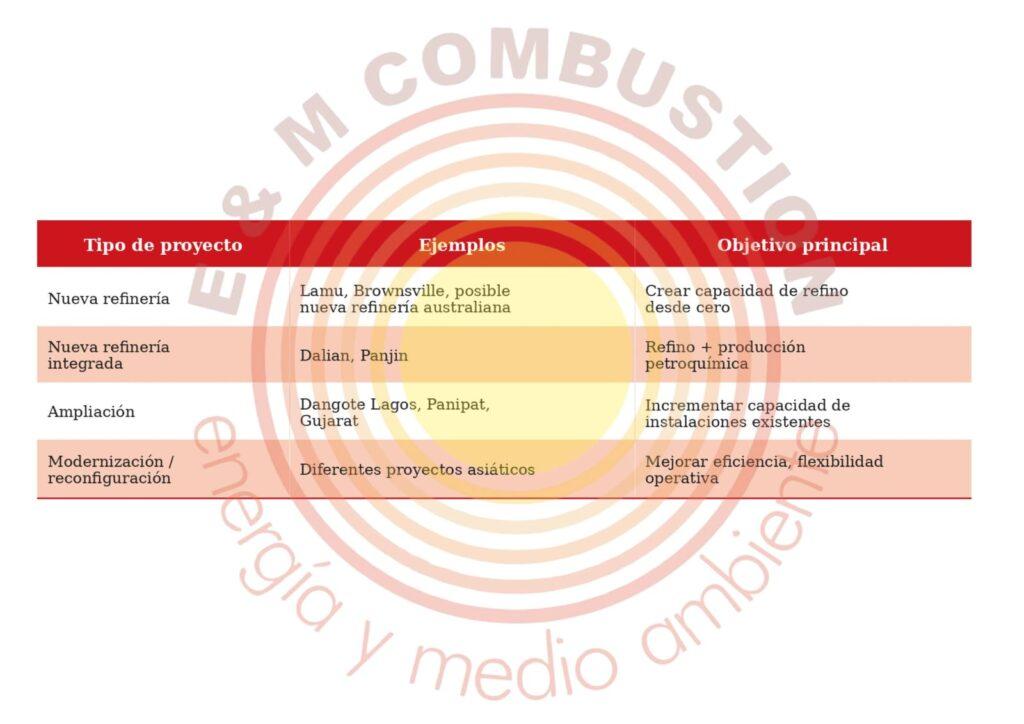
A new global refining landscape is emerging. However, the projects analyzed reveal that there is no single global trend.
In Africa, the priority is to reduce import dependency and develop domestic industrial capacity—with Nigeria serving as the most advanced example and the Kenya project aiming to extend this model to East Africa. Meanwhile, in Asia, refining growth is increasingly linked to the petrochemical sector. Projects in Dalian and Panjin demonstrate how new facilities are being designed as large integrated complexes, where crude oil serves as the feedstock for a much broader industrial value chain.
In India, growth is driven primarily by the expansion and modernization of large existing complexes. In the United States, the Brownsville proposal highlights the interest in aligning refining capacity with the characteristics of domestically produced crude oil. And in Australia, the key issue is supply security versus reliance on imports.
The common denominator, therefore, is the need for facilities that are more flexible, efficient, and integrated.
Energy efficiency and combustion technologies in new oil refinery projects
Beyond mere barrel counts, the real story lies in the technological transformation of refineries. The new generation of refining projects cannot be evaluated solely in terms of capacity; factors such as integration with petrochemical operations, energy efficiency, emissions reduction, and the ability to process various crude oil types are becoming increasingly important.
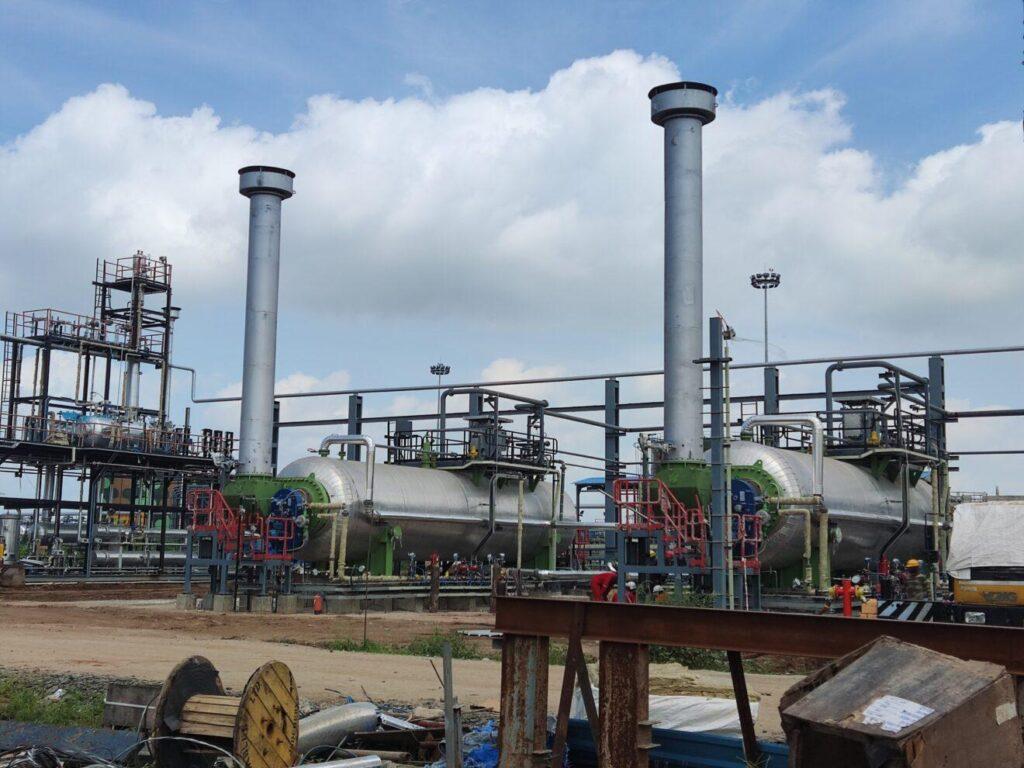
In this context, combustion systems play a pivotal role across numerous refinery process units. Industrial furnaces and heaters require solutions capable of operating reliably under diverse conditions and with various fuels, all while maintaining high levels of efficiency and effective emissions control.
Air-to-fuel ratio regulation, flame control, safety system management, and combustion optimization are essential for ensuring safe and efficient operation. Furthermore, in complex industrial facilities, the commissioning, calibration, and maintenance of combustion systems are critical to preserving equipment performance throughout its service life, as noted by the technical experts at E&M Combustión.
Opportunities for the oil and gas value chain from new refinery projects
These new projects and expansions present opportunities for the entire oil and gas value chain. The new wave of investment in refining affects more than just major oil companies; each new complex mobilizes an extensive network of suppliers—ranging from engineering firms and process equipment manufacturers to providers of control systems, environmental technologies, maintenance services, and specialized support.
For manufacturers of industrial combustion equipment like E&M Combustión, this landscape underscores the importance of developing solutions tailored to the evolving demands of refineries and petrochemical complexes. The sector is shifting toward facilities that must balance thermal efficiency, operational flexibility, reliability, safety, and emissions control.
Consequently, while the construction of a new refinery remains a rare event in many regions, emerging projects demonstrate that refining continues to hold a strategic position within the global energy system.
The global refining landscape is changing
Although the construction of new refineries remains far less common than in previous decades, a combination of factors—including demand growth in specific markets, energy security, crude oil availability, petrochemical development, and geopolitical tensions—is driving new investment.
Nigeria and Kenya are spearheading the growth of African refining capacity; China and Saudi Arabia are prioritizing large-scale integrated complexes; India continues to expand its facilities; the United States is considering a new refinery for the first time in decades; and Australia is exploring the restoration of capacity that had all but vanished. The future of refining, therefore, does not follow a single model. The trend points toward facilities that are more integrated, technologically advanced, and adapted to the specific needs of each market.
For the entire oil and gas value chain, this process heralds a new phase of investment in the equipment, engineering, and technologies needed to enhance the efficiency, safety, and environmental performance of industrial facilities.
You might also be interested in:
New oil refineries in Africa
Monoblock burners for oil and gas heaters
Oil and gas value chain: focus on refining